

Current Research Projects
Our Studies
Vitamin C Study
Vitamin C Supplementation for Pregnant Smokers and Pulmonary Function in Their Newborn Infants: A Randomized Clinical Trial
Could something as simple as a daily vitamin C supplement during pregnancy help protect a baby's lungs? That's exactly what this study set out to find. Our research showed that babies born to pregnant smokers who took vitamin C had significantly better lung function — a promising and affordable finding with the potential to improve children's health worldwide.
Dr. McEvoy has completed two separate randomized double-blinded trials of vitamin C supplementation to pregnant people unable to quit smoking. Results showed significantly improved pulmonary function tests and decreased wheeze in infants born to those randomized to vitamin C versus placebo during pregnancy.
Vitamin C supplementation to pregnant smokers may be a safe, inexpensive, and simple measure with great public health significance to improve childhood respiratory health globally.
Study results show at 3 months old, 12 months old, and 5 years old that the vitamin C arm offspring had significantly better lung function. The team have received funding to continue following the lung trajectories between the two arms.

ECHO
Environmental influences on Child Health Outcomes (ECHO) Program
What in a child's environment — from the air they breathe to where they grow up — shapes their long-term health? The ECHO program brings together over 50,000 families across the country to find out. We are proud to be one of the contributing research sites helping answer these important questions.
ECHO is a collaborative study with over 50,000 children from 44 different states and their families investigating the effect of a variety of environmental factors on childhood health outcomes.
The ECHO mission is to enhance the health of children for generations to come and to accomplish this, ECHO is studying a broad range of early environmental exposures, from society to biology, and how they impact health outcomes throughout childhood and adolescence.
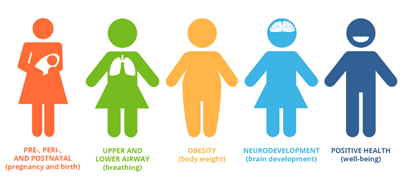
The collaborative is focused on five key pediatric outcome areas:
eCPAP
Extending CPAP Therapy in Stable Preterm Infants to Increase Lung Growth and Function: A Randomized Controlled Trial
For babies born too early, their lungs often need extra time and support to grow strong. This study asked a simple question: what if we kept premature babies on breathing support just a little longer in the NICU? The results were encouraging — and NICUs around the world are paying attention.
Babies born early (preterm) tend on average to have lungs underdeveloped at delivery that can cause breathing problems throughout their life.
We showed that preterm infants randomized to eCPAP had bigger lungs that worked better when we studied them after discharge at about 6 months of age
Keeping preterm babies on CPAP just a little longer than usual in the NICU may be a simple way without using medications to promote lung growth and make their lungs stronger.
Very importantly, Dr. McEvoy has gotten further funding from the NIH to continue to follow these children and see how their lungs continue to grow as they enter childhood. NICUs across the world are interested in results.
“Helping Children. Making a Difference. Lifesaving. Collaboration. Knowledge. Growth. Ground Breaking”
— Participant quote about our research